Dark Streaks on the Roof in Humid New England? Algae vs Real Damage
Quick Answer: Dark streaks that run down the roof in vertical bands, mostly on the shaded or north facing slopes, are almost always roof algae, a cyanobacterium called Gloeocapsa magma. It feeds on the limestone filler in asphalt shingles and protects itself with a dark pigment. Algae is mainly a cosmetic problem at first. Moss, lichen, bald patches where granules have worn away, and lifted shingle edges are the real damage, and they need a different response. Check the texture of the streaks, the condition of the granules in your gutters, and whether the shingle edges still lie flat. Never use a pressure washer on an asphalt roof.
You pull into the driveway on a gray October afternoon and notice it again. The roof over the garage has a dark, dripping looking stain running from the ridge down toward the gutter, and the back slope facing the yard looks like someone took a charcoal stick to it. Your neighbor's roof across the street has the same pattern. A year ago it was a faint smudge. Now it is hard to ignore.
The first question every homeowner asks is whether those streaks are just ugly or whether the roof is quietly failing. Both answers are possible, and the difference matters. In Rhode Island and southeastern Massachusetts, where humid summers, heavy dew, coastal fog, and long damp shoulder seasons keep shingles wet longer than you might expect, dark staining is one of the most common things we see when we climb a ladder. Most of the time it is algae. Some of the time it is algae sitting on top of a roof that is already wearing out. A few times a year it is something else entirely.
Here is how to tell which one you are dealing with, using what you can see from the ground and the gutter line.
What Those Dark Streaks Actually Are
The black or dark brown staining on asphalt shingles is caused by Gloeocapsa magma, a blue green algae that the roofing industry usually just calls roof algae. It is often mistaken for mold, mildew, or dirt, but it is a living colony that travels on the wind as spores and settles wherever moisture lingers on the surface.
It Feeds on the Shingle Itself
Asphalt shingles contain limestone filler that algae uses as nourishment. Its dark protective sheath blocks ultraviolet light, creating visible stains after months of growth.
It Spreads in Streaks Because Water Carries It
Rain carries algae spores downward across shingles, creating vertical streaks. Stains often begin below vents, chimneys, or roof ridges before spreading downward.
It Spreads Neighborhood Wide
Algae spores travel through the air, affecting multiple roofs across neighborhoods. Widespread staining usually indicates favorable growing conditions rather than individual roof problems.
The industry position on algae has been consistent for years. Algae on its own is mainly an appearance issue, and there is no firm evidence that it destroys a healthy shingle quickly. The longer view is a little less comfortable. A colony holds moisture against the surface, and a shingle that stays damp ages differently than one that dries off each morning. On a roof that is already near the end of its life, that extra moisture is not helping.
Why Humid New England Roofs Grow It So Easily
Algae needs three things: a food source, spores, and moisture. Your roof supplies the first by default and the air supplies the second. Our climate is generous with the third.
Shade Holds Water
North facing slopes, dormers, and tree-covered sections stay damp longer after rain, creating favorable conditions for algae growth.
Dew and Coastal Fog Count as Rain
Coastal dew and morning fog keep shingles damp for hours, allowing algae to grow even when rainfall never occurs.
Tree Debris Feeds the Problem
Leaves, pine needles, and accumulated grit trap moisture against shingles, encouraging algae colonies to establish and spread.
Older Shingles Are Easier to Colonize
Weathered shingles develop rougher surfaces that retain moisture, making ten or fifteen year old roofs more vulnerable to algae growth.
TIP: Walk around the house and compare slopes. If the streaking is heaviest on the shaded side and barely shows on the sun facing side, that pattern points to moisture and algae. Damage from wear or storm impact does not follow the shade line.
Algae, Moss, Lichen, or Real Damage: Reading the Difference
Not every dark patch on a roof is the same organism, and the response is different for each. This is the part that is worth slowing down for, because treating moss like algae, or ignoring bald shingles because you assumed they were stained, is how a small issue becomes a leak.
Algae Looks Flat and Streaky
Algae forms a thin, dark surface film that follows vertical streaks. Its appearance may fade visually when shingles dry or lighting conditions change.
Moss Looks Raised and Fuzzy
Moss grows in green or brown cushions along shaded shingle edges. Its roots lift shingles, increasing the risk of wind damage during severe storms.
Lichen Looks Crusty and Stuck On
Lichen forms firmly attached gray, green, or orange patches. Removing established growth risks scuffing shingles, while heavy infestations may indicate prolonged surface deterioration.
Granule Loss Looks Like Dark Patches That Are Actually Bare
Missing mineral granules expose dark asphalt beneath shingles. Unlike algae streaks, these irregular patches often appear on sunny slopes and indicate aging or surface wear.
Storm Damage Looks Like a Pattern With a Cause
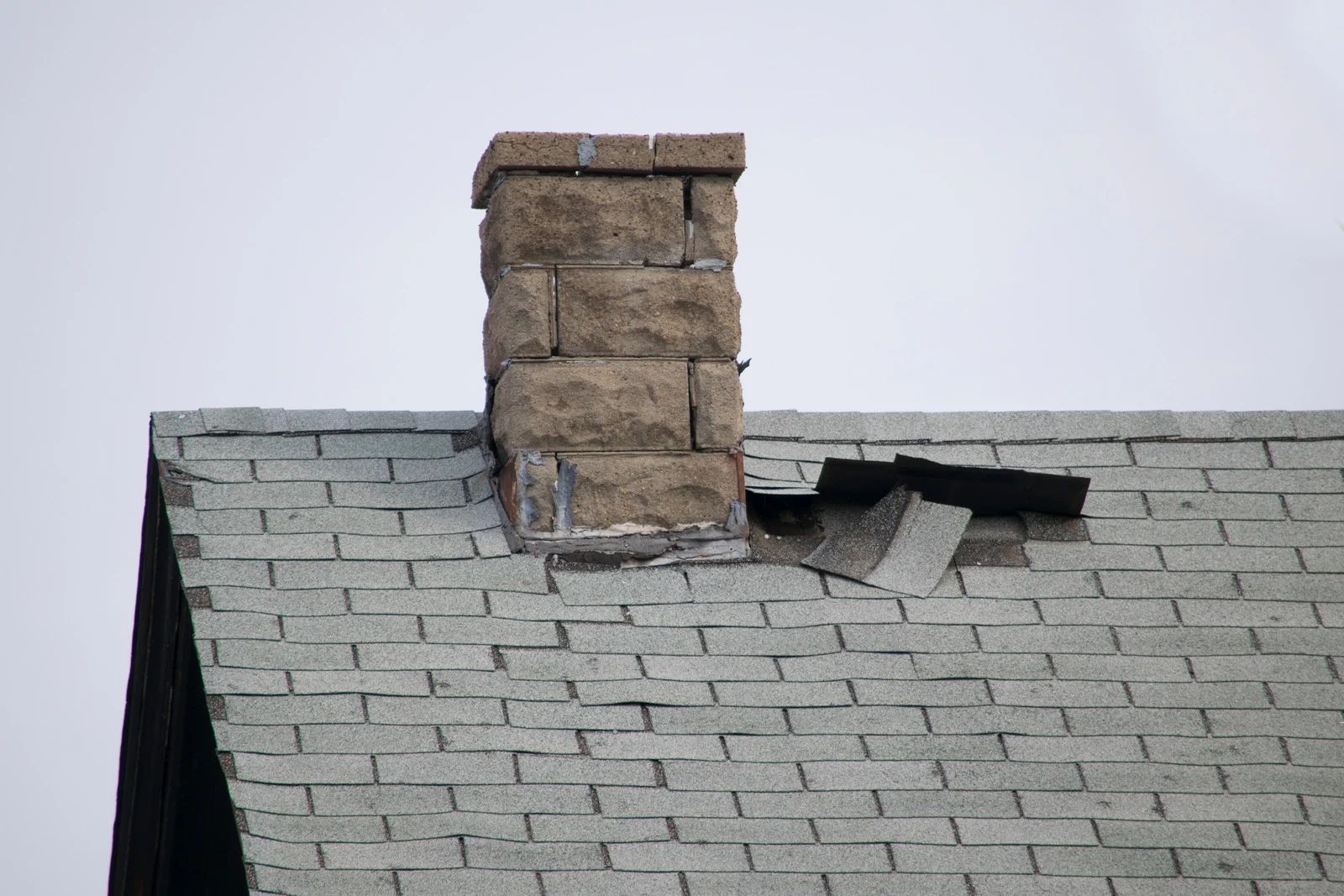
Storm damage appears as localized missing granules, creased shingles, or exposed nails. These distinct patterns indicate physical impact or wind rather than biological growth.
WARNING: Do not scrape, scrub with a stiff brush, or pressure wash dark streaks on shingles. Aggressive cleaning strips granules, and granules are the layer that protects the asphalt from sun and water. Removing a stain by removing the surface is trading a cosmetic problem for a structural one.
Checking the Roof Without Climbing On It
You do not need to get on the roof to learn a great deal, and you should not. Wet shingles in October are slippery, and a fall is a far bigger problem than any stain. These checks can all be done from the ground.
Look at the Gutters and Downspout Outlets
Check gutters for excessive dark granules resembling coarse sand. Heavy accumulation on older roofs signals shingle wear beyond surface staining.
Use Binoculars Along the Shingle Edges
Look for curled, cupped, or lifted edges indicating moisture damage or moss. Flat, tight edges with dark streaks suggest algae.
Check the Slope Pattern
Streaks following water flow indicate algae, while scattered bald patches on sunny slopes usually suggest shingle wear.
Look at the Attic if You Can
Dark roof decking or damp insulation beneath stained slopes may indicate leaks, requiring closer inspection rather than simple cleaning.
Note How Old the Roof Is
Younger roofs with healthy shingles may need cleaning. Older roofs showing granule loss and curling edges may require replacement planning.
What Actually Works for Algae Staining
If an inspection shows the streaks are surface algae on sound shingles, you have good options, and none of them involve force.
Low Pressure Cleaning With a Roof Safe Solution
Apply roof-safe cleaning solutions with a sprayer, allow proper dwell time, then rinse gently. Trained crews manage runoff risks and slippery surfaces safely.
Never a Pressure Washer
Pressure washing strips protective granules from asphalt shingles and can shorten roof lifespan. Avoid contractors who recommend blasting shingles with high-pressure water.
Fix the Moisture, Not Just the Stain
Trim overhanging branches, clear gutters and valleys, and maintain attic ventilation. Faster roof drying reduces moisture retention and discourages future algae growth.
Algae Resistant Shingles at Replacement
Choose replacement shingles containing copper-bearing granules to discourage algae and moss growth. These products offer practical protection for shaded, humid properties.
Zinc or Copper Strips at the Ridge
Metal strips release trace ions that discourage growth during rainfall. Install them during reroofing to avoid exposed nails, damaged seals, and potential leaks.
When Streaks Mean It Is Time to Look Deeper
Stains alone do not decide whether a roof needs work. The surrounding evidence does. These combinations are the ones that move a roof from cleaning to repair or replacement.
Streaks Plus Granule Loss in the Gutters
Granule loss indicates shingle deterioration that cleaning cannot reverse.
Streaks Plus Curling or Lifted Edges
Moisture damages shingle layers, increasing vulnerability to wind damage.
Moss in the Lower Courses
Remove moss carefully and inspect underlying shingles for lifting or damage.
Streaks on an Aging Roof
Cleaning may only delay necessary replacement discussions for aging roofs.
Any Interior Staining or Damp Insulation
Investigate potential roof leaks before attempting any exterior cleaning.
If none of those apply, you most likely have a healthy roof with a cosmetic stain, and a careful, low pressure treatment plus a few moisture fixes will take care of it.
Frequently Asked Questions
Are the black streaks on my roof mold?
Almost never. The streaks come from a blue green algae called Gloeocapsa magma. Mold and mildew can appear on damp, shaded surfaces, but long vertical stains on asphalt shingles are algae.
Will roof algae damage my shingles?
Short term, algae is mainly cosmetic. Over many years, the moisture it holds and its feeding on limestone filler can add wear, especially on older roofs. Moss and lichen are more damaging.
Can I clean the roof myself with a pressure washer?
No. Pressure washing strips granules from asphalt shingles and can shorten roof life. Use low pressure cleaning with a gentle rinse, ideally by a trained crew who can work safely.
Why does only one side of my roof have streaks?
The shaded slope, usually north facing, stays damp longer, and algae grows where the surface rarely dries. Sun exposed slopes dry faster and show less staining.
Do algae resistant shingles really work?
Yes, copper bearing granules discourage algae and moss growth for many years. They suit humid or shaded homes at replacement, though gutters and overhanging trees still need regular maintenance.
How do I know whether dark patches are algae or bald spots?
Algae follows water flow in streaks on the surface. Bald spots are irregular dark patches, often on sunny slopes, with extra granules in the gutters below. A professional can confirm quickly.
Reading the Stain Before Deciding on the Fix
A dark streak is only a symptom, and the same symptom can come from a harmless algae colony or from a roof that is wearing out. The shape of the streak, the age of the shingles, the grit in your gutters, and the way the edges lie all show which story you are reading. Once that is clear, the next step becomes a straightforward decision, whether it means a gentle cleaning, a moisture fix, a repair, or a plan for replacement.
Most stained roofs turn out to be healthy roofs with a cosmetic problem, but the few that are not deserve attention before the next nor’easter arrives. TKO Builders, LLC
has spent 20
years working on roofs across Warwick, RI, and that time has shown that careful checks of granules, moss, and lifted edges separate a simple cleaning from real damage. Skipping the pressure washer and addressing moisture keeps the shingles protected for years to come.