Roof Leaking Around the Chimney or Skylight? Why Flashing Fails First
Quick Answer: A roof leak that shows up right around a chimney or skylight is almost never a shingle problem. It's a flashing problem. Flashing is the thin metal that bridges two different materials — shingles and masonry, or shingles and glass — and that seam depends on overlapping layers and gravity, not on the shingles themselves. Chimneys need three separate pieces working together (step flashing, base flashing, and counterflashing set into the masonry), and skylights need their own three-part kit (sill, step, and saddle flashing) installed in a specific sequence. When any one piece is missing, undersized, or was patched with caulk instead of proper metal, water finds the gap during a wind-driven storm long before the shingles around it show any wear.
You spot it on a January morning: a brown ring spreading across the ceiling drywall a few feet from where the chimney passes through the attic. Or it's spring, and there's a damp smell near the skylight in the bedroom every time it rains sideways. Either way, your first instinct is probably to blame the roof itself — maybe it's just old, maybe it's time to replace it. But pull back the shingles around that chimney or skylight and you'll usually find the actual roofing material in decent shape. The leak isn't coming from the field of the roof. It's coming from the transition where the roof meets something that isn't a roof.
That transition is where flashing lives, and flashing is the part of a roof most likely to fail first — not because it's cheap material, but because it's doing a harder job than anything else up there.
Flashing Does a Different Job Than the Shingles Around It
A shingle only has to shed water in one direction, on one surface, made of one material. Flashing has to seal the gap between two different materials that expand, contract, and settle at different rates — asphalt shingles and brick masonry, or asphalt shingles and a glass-and-frame skylight unit. That mismatch is exactly why flashing can't rely on sealant or caulk as its main defense.
Overlap Does The Work, Not Adhesive
Properly installed flashing sheds water the same way shingles do: through layered, overlapping pieces that let gravity carry water downhill and off the roof, piece by piece. Sealant is a backup, not the plan. A flashing detail that depends on a bead of caulk staying intact for years is a detail that's already set up to fail once that caulk shrinks, cracks, or lets go — and in a New England winter, that happens faster than most homeowners expect.
Two Materials, Two Rates Of Movement
Masonry expands and contracts slowly with temperature. Asphalt shingles move faster and more with heat. A skylight frame moves differently still. Flashing has to accommodate all of that motion year after year without opening a gap, which is a tall order for anything that isn't designed with movement built in.
Chimney Flashing Is Actually Three Separate Pieces
Homeowners tend to picture chimney flashing as one metal collar wrapped around the base. In a properly built system, it's three distinct components, each covering a different side of the chimney and each overlapping the one below it.
Step Flashing
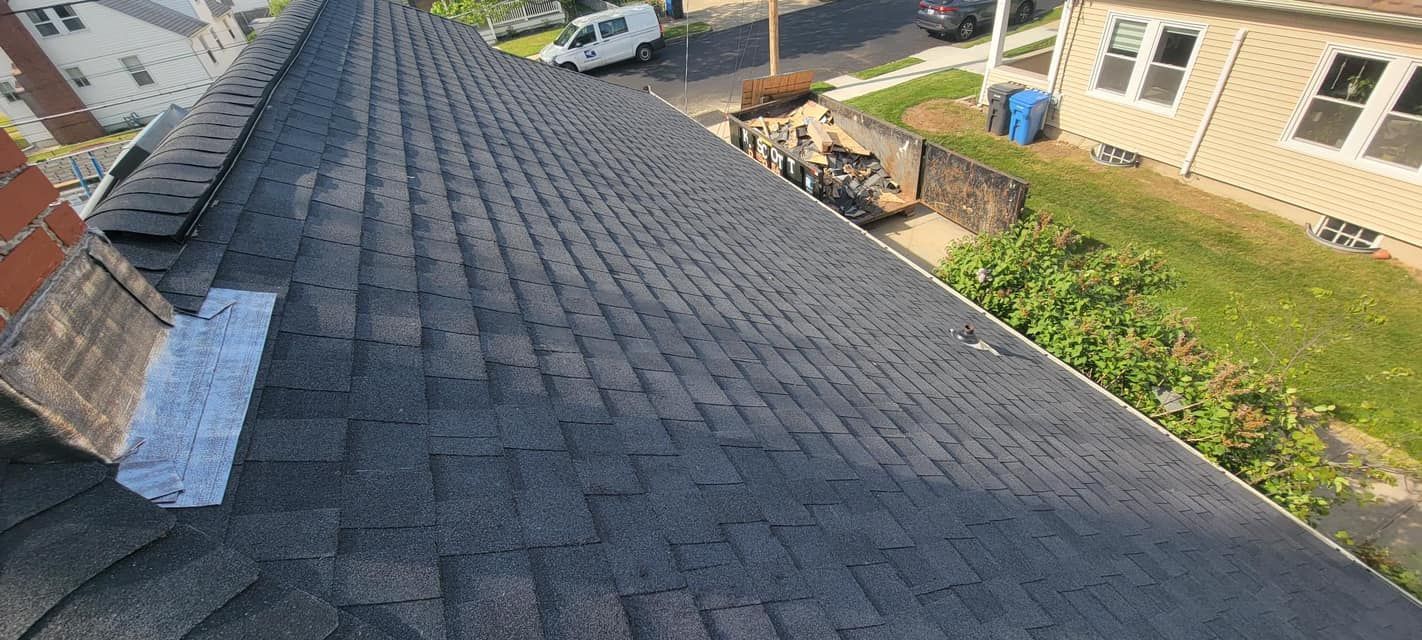
Along chimney sides, individual L-shaped metal pieces are woven into each shingle course as roofing progresses. Each piece overlaps the next, keeping water above the metal instead of letting it travel sideways into seams, while the vertical leg rises against masonry for added protection during heavy weather.
Base Or Apron Flashing
Across the chimney’s downhill side, a single piece of base or apron flashing catches water flowing down the roof and redirects it around the masonry. This prevents water from collecting where shingles meet the chimney, helping protect the underlying roof deck and surrounding materials from moisture intrusion.
Counterflashing
Counterflashing covers the upper edge of step and base flashing and should be inserted into a reglet cut into the mortar joint. It overlaps the flashing below, limiting capillary action. Surface-mounted counterflashing sealed against brick may resist light rain but can fail when wind-driven water forces beneath exposed edges.
TIP: If you can see daylight or a visible gap between the counterflashing and the brick from inside the attic, or if the counterflashing looks like it's just glued to the surface of the chimney rather than tucked into a cut groove, that's worth flagging before the next big storm rather than after.
Skylight Flashing Follows Its Own Three-Part Sequence
A skylight leak traces back to a similar layered system, just built around a frame instead of masonry. Manufacturer installation guidance for asphalt-roof skylights calls for sill flashing at the bottom, step flashing woven up both sides in sequence with the shingle courses, and saddle flashing across the top — installed in that exact order, because each piece has to overlap the one before it correctly for water to shed downhill instead of pooling.
Before any of that metal goes on, a properly installed skylight also gets a deck seal directly against the roof deck and a layer of all-weather underlayment running up the sides of the unit and out onto the surrounding roof surface. Skip that underlayment, install the step pieces out of sequence, or leave too small a gap between the top flashing and the shingle course above it, and you've built a leak into the installation from day one — one that might not show up in the first mild summer but will make itself known the first time wind-driven rain hits that seam from an angle.
New England Weather Targets These Exact Seams
Coastal New England throws a specific combination of conditions at a roof that flashing feels more than almost anything else up there. Nor'easters bring sustained wind-driven rain that pushes water sideways and upward against vertical seams, which is precisely the direction flashing is weakest if a lap or overlap is undersized. Winter freeze-thaw cycles work mortar joints loose around chimney reglets, widening the very groove the counterflashing depends on for a tight seal. And salt air along the coast accelerates corrosion on lower-grade or improperly finished metal flashing faster than it would inland.
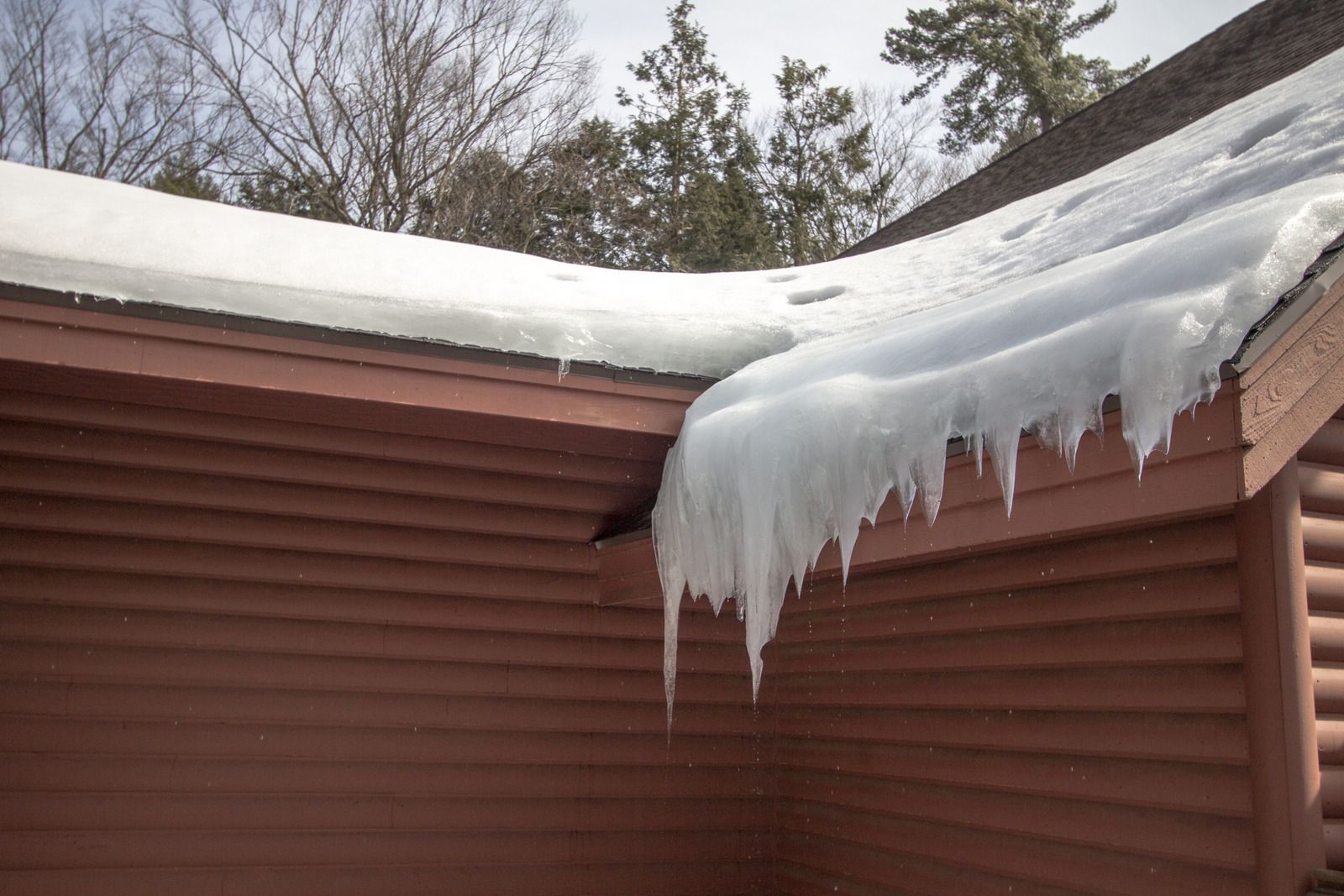
Ice damming compounds all of it. When melting snow refreezes at a cold roof edge and backs water up under the shingle courses, that trapped water doesn't stop at the eave — it can travel far enough upslope to reach a chimney or skylight and push against flashing seams from underneath, a direction the flashing was never designed to resist.
WARNING: A leak that only shows up during or right after a wind-driven storm — and stays dry during straight-down rain — is a strong sign the problem is a flashing lap or seam rather than a worn shingle. Don't wait for a calm-weather leak to confirm it; by the time water gets in during ordinary rain, the flashing has usually failed more broadly and the deck underneath has had time to absorb repeated moisture.
Reading the Signs: Flashing Failure vs. a Worn Roof
A water stain that appears in roughly the same spot every time, directly below or just to the side of a chimney or skylight, points to a flashing seam rather than general wear. Compare that to staining that spreads and shifts location across the ceiling over time, which more often points to a widespread underlayment or shingle issue across the field of the roof.
Timing Tells You A Lot
A stain that only darkens after storms with strong wind, and stays put through gentle steady rain, is consistent with flashing lap being overwhelmed by wind-driven water rather than material failure.
Interior Clues Near The Chase
Efflorescence—a white, chalky mineral deposit—on chimney brick, or rust streaks descending where flashing meets masonry, can indicate water slipping behind counterflashing instead of penetrating roof deck itself.
Age Doesn't Always Match The Story
A roof only a few years old can still have flashing trouble when counterflashing is poorly installed, sealant replaces proper masonry joints, or skylight step flashing was installed incorrectly during construction.
What an Actual Flashing Repair Involves
A real fix goes well past running a bead of new caulk along the visible seam, which tends to buy a season or two before the same gap reopens. For a chimney, that usually means pulling back the surrounding shingles, replacing or resetting the step flashing, and cutting or re-cutting a proper reglet so the counterflashing tucks into the masonry with a real capillary break instead of sitting against the surface. For a skylight, it typically means removing the shingle courses around the unit, replacing the full flashing kit — sill, step, and saddle together, since a mismatched mix of old and new pieces defeats the overlap sequence — and confirming the underlayment beneath it is intact and properly lapped.
Ice-dam protection membrane at the eaves and around the base of the flashing adds another layer of defense specifically for the freeze-thaw pattern common on New England roofs, giving water somewhere to go even if it does get past the first line of defense during a hard winter melt-refreeze cycle.
Frequently Asked Questions
How can I tell if a leak near my chimney is coming from the flashing or the chimney itself?
Water tracking down the chimney's outside face or appearing on interior brick well below the roofline points to the masonry or crown. A leak right at the roofline, where flashing meets brick, usually points to flashing instead.
Does a skylight need new flashing every time the roof gets new shingles?
In most cases, yes. Skylight flashing is woven into the surrounding shingle courses, so reusing old metal after a reroof risks a seal that no longer holds against new shingles. Manufacturers typically recommend a fresh flashing kit with every reroof.
Can a chimney flashing leak be fixed without removing any shingles?
Rarely, and not well. Sealant applied over an existing gap without pulling shingles can slow a leak temporarily. A durable repair almost always requires lifting the nearby shingle courses to properly reset the step and counterflashing underneath.
Why does my skylight only leak during storms with strong wind?
Wind-driven rain hits flashing seams at an angle instead of falling straight down, pushing water into laps that shed normal rainfall just fine. A wind-specific leak strongly suggests a flashing lap issue rather than a failed skylight unit.
Is surface-mounted counterflashing with caulk ever an acceptable long-term solution?
It holds up fine through light, short-duration rain, but not through sustained wind-driven storms. The sealant it relies on breaks down with UV exposure and temperature swings well before properly set counterflashing would need attention again.
How often should chimney and skylight flashing be inspected?
An annual check, ideally after the roof has been through a full winter of freeze-thaw cycles, catches most developing issues early. Checking again after any major wind event or nor'easter is worth it, since that's when weak flashing tends to show itself.
The Leak Rarely Comes From Where You Look
Chasing a leak by staring at the shingles nearest the stain usually leads somewhere, usually the wrong place. The seam where a roof meets a chimney or skylight does more work than any single shingle on the roof, holding back water at the exact point where two different materials refuse to move together. Once that's clear, a stain near the chimney or a damp smell by the skylight stops looking like a mystery and starts looking like what it is.
TKO Builders, LLC
has spent 20
years working on roofs across Warwick, RI, and flashing failures like these show up again and again, regardless of a roof's age. A chimney or skylight leak rarely means the whole roof needs replacing. It usually means one seam was never built to handle wind-driven rain, freeze-thaw cycles, and salt air, unlike the rest of the roof. Recognizing that difference is what separates a
lasting roof repair
from years of chasing the same stain.